
 Summary:
- NYC’s Public Design Commission unanimously tabled its vote on part of the $8 billion Metropolitan Park project.
- The decision followed a lengthy public hearing where flooding concerns took center stage.
- The project already holds a state casino license and city approvals, and construction is underway.
New York City’s Public Design Commission has agreed to delay a vote on part of the proposed Metropolitan Park casino complex in Queens after residents raised a series of concerns about flooding, environmental impacts, and the project’s overall effect on the surrounding community.
Unanimous Vote
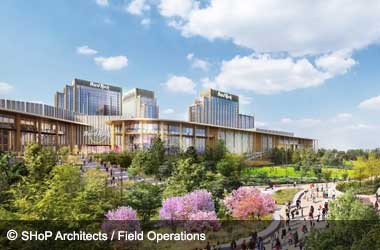
The commission unanimously voted Tuesday to table its review of the design for a staircase and balcony area that would connect the $8 billion development with a planned public park near Citi Field.
The decision followed a lengthy public hearing that lasted nearly five hours and drew strong opposition alongside support for the project.
Although the commission was initially scheduled to consider a specific section of the design, the discussion expanded to the wider development, which is being led by Steve Cohen and Hard Rock.
Several residents questioned whether the project would adequately address flooding in northwestern Queens, an area that has already experienced problems with water accumulation.
Commissioners said they wanted a better understanding of the site’s overall environmental conditions before deciding on individual design elements.
Public Design Commission President Deborah Marton said.
We can’t really think about this until we make sure that we understand what the site as a whole is doing
The commission has already approved other parts of Metropolitan Park’s plans, including its master plan, lighting proposals and a parking garage. However, the volume of public testimony prompted members to reconsider whether they had enough information to proceed with the latest vote.
Divided Opinions
Supporters told the commission that the casino and entertainment complex could create jobs and bring additional economic activity to Queens. Some also praised the developers for incorporating community input into the plans.
Those who opponents the project questioned whether the development would actually benefit residents, raised concerns about the potential social costs of expanding gambling.
Others claimed that the city-owned land should be used for a different public purpose.
Design-related criticism also emerged during the hearing. One speaker objected to the proposed long glass windows, while another said the planned park risked being overshadowed by the scale of the casino building.
Commission member Kenseth Armstead questioned whether the design review process could adequately address the broader concerns being raised by residents.
Armstead said, arguing that the public opposition warranted further consideration,
I feel like there’s this huge elephant, and we’re talking about what kind of saddle we’re going to put on the elephant
Casino Approval, Still in Place
The postponement does not suggest that Metropolitan Park has lost its approval for a casino.
On the contrary, the project continues to hold on to one of three downstate casino licenses awarded by the New York State Gaming Commission in 2025.
The project also secured the necessary city permissions for further development.
In February 2025, the city established that the project’s benefits outweighed the adverse impacts it could have on the environment.
Nonetheless, the design commission wanted a clearer understanding of the respective impacts before casting a vote on the remaining design details.
No date was announced for the next vote. Commission member Merryl Tisch expressed confidence that the design would eventually be approved, saying, “I’m sure we’ll get to a yes.”
Construction has begun, although the project has faced delays. In May, the Queens Eagle reported that foundation testing for the parking lot had not started by the date developers had previously given regulators, pushing back the planned start of casino construction.
Metropolitan Park spokesperson Karl Rickett said work on the 78-acre development was “well underway”. He added that the design reflected years of community engagement and thanked the commission for its continued input.
For now, the project remains approved, but the latest hearing has put environmental questions and community concerns back at the center of the design review.
About the Author